Production Coffee
Location and Working with Actors
I was looking for a clean aesthetic. A location that would match the aesthetic of the chrome coffee machine. I didn’t want the location to distract from the actor or what he was doing. I wanted the actor to wear brown to match the colour of the coffee, visually depicting how invested the actor is in the coffee world.
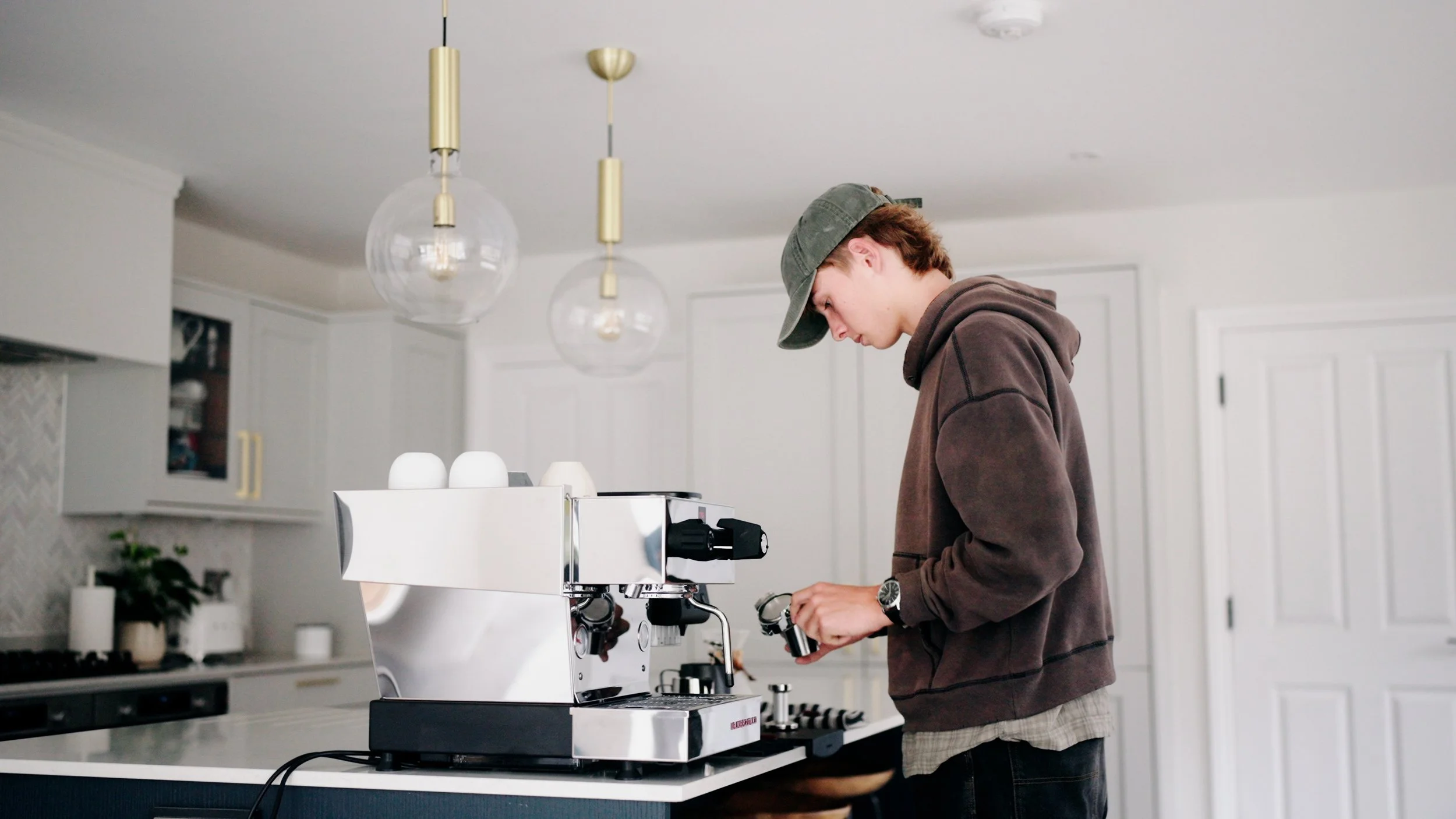
The actor was great in that this was almost like a documentary for him. He is truly passionate about coffee, and he struggles to understand why someone is not passionate about coffee. Most of the direction I gave him was asking him to go through the ritual of making coffee as I filmed it from multiple angles.
Equipment and Cinematography Choices
The film was shot on a Sony ZV-E1 using a 35mm lens. The confined space in the kitchen, and the types of shots I had in my storyboard, were best achieved using the 35mm lens.
The Sony ZV-E1 does have an amazing autofocus, which can be incredibly helpful, but it can also be incredibly frustrating when it chooses to focus in the wrong place. This is particularly true when you are trying to focus on what someone is doing with their hands. The AI is optimised to focus on faces and eyes. You can overcome this by selecting the focus point on the viewfinder, but this introduces camera shake.
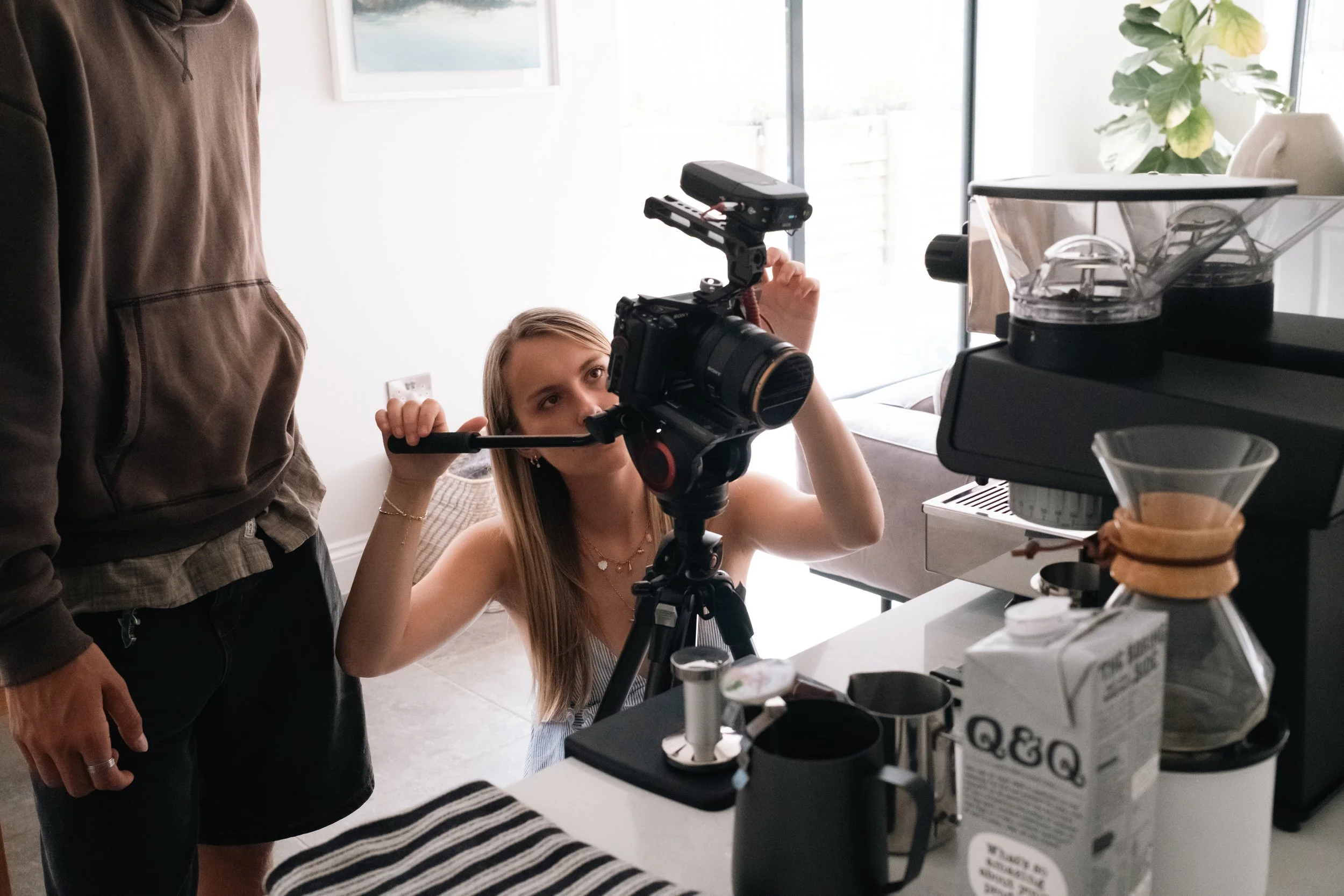
Tripod - locked off.
Most of this film was shot locked off on a tripod with little to no camera movement. I decided to shoot in this way as it matched the clean and precise aesthetic of the story. The tripod was also helpful in capturing some of the overhead shots I knew I needed.
The other reason the film was shot locked off was practical. I was one of the actors in the film, and I was able to compose the shot on the tripod before moving into position for the shot.
Lighting
The location had large windows and a large glass bi-fold door, which let in lots of natural light. I needed to fill the shadows, particularly in the shots when the actor was backlit by the natural light. I used a Amaran 60d s 65W light with a softbox.
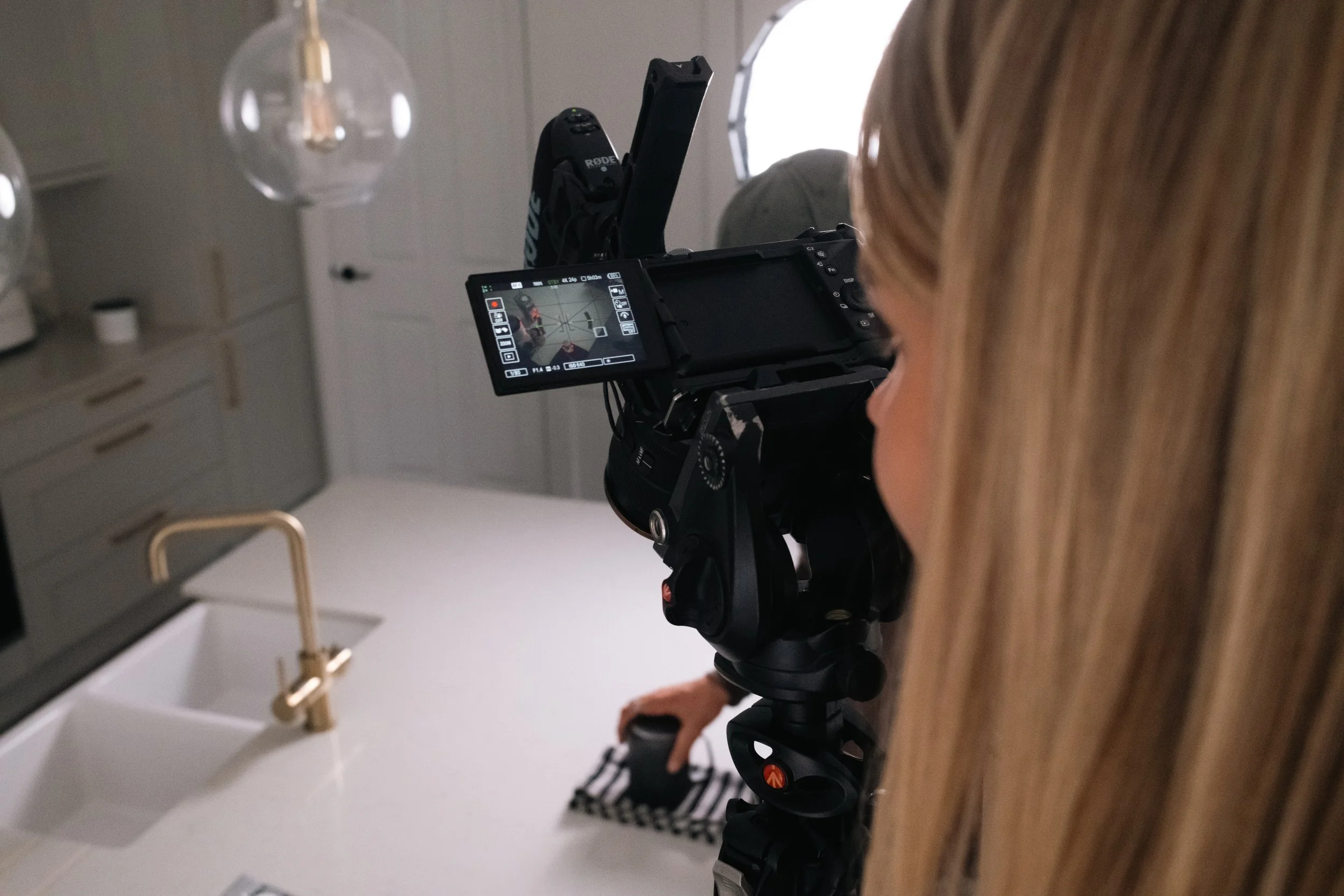
I matched the light settings to daylight so as to minimise the work I needed to do in colour correcting. One of the challenges I had was that the coffee machine was highly reflective. I had to reposition my light and my camera so that I did not inadvertently appear in the reflection of the coffee machine. Annoyingly, in one of the opening shots, you can see the tripod legs reflected by the coffee machine.
Sound
Sound in this film taught me just how challenging capturing sound can be. I relied on a Rode camera-mounted shotgun mic. While the location had a clean aesthetic, the lack of curtains and soft furniture meant that the sound had an echo to it. The voices also appeared distant since the microphone was distant. Lavalier mics may have been a better option.
I was acting, filming, and directing. It was very difficult to monitor the audio levels while I played these other roles. A larger crew with dedicated sound technicians would have greatly improved the quality of the sound in this film.
Voice Over
My friend, Judah Simmons, was the writer of the script, and I was the editor. Judah created a script based on how he saw coffee as an art form. He sent his script to me in the form of a voice note. I transcribed that voice note and refined the script to fit a shorter length.
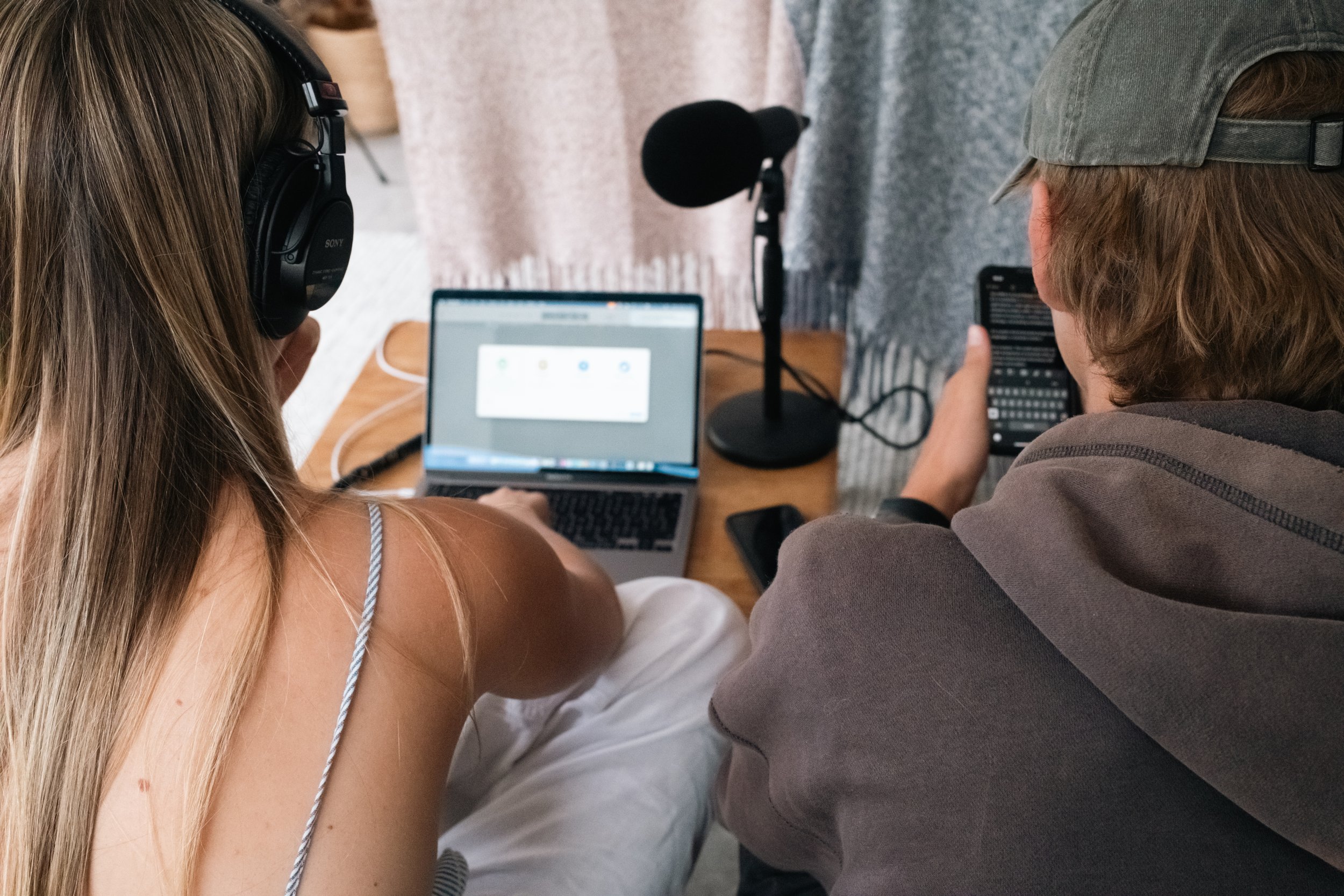
Once we filmed the footage for the film itself, we then recorded the refined version of Judah’s script with a Rode Pro caster mic into Garage Band. We surrounded ourselves with blankets to avoid any echo effect that the living room could have caused.